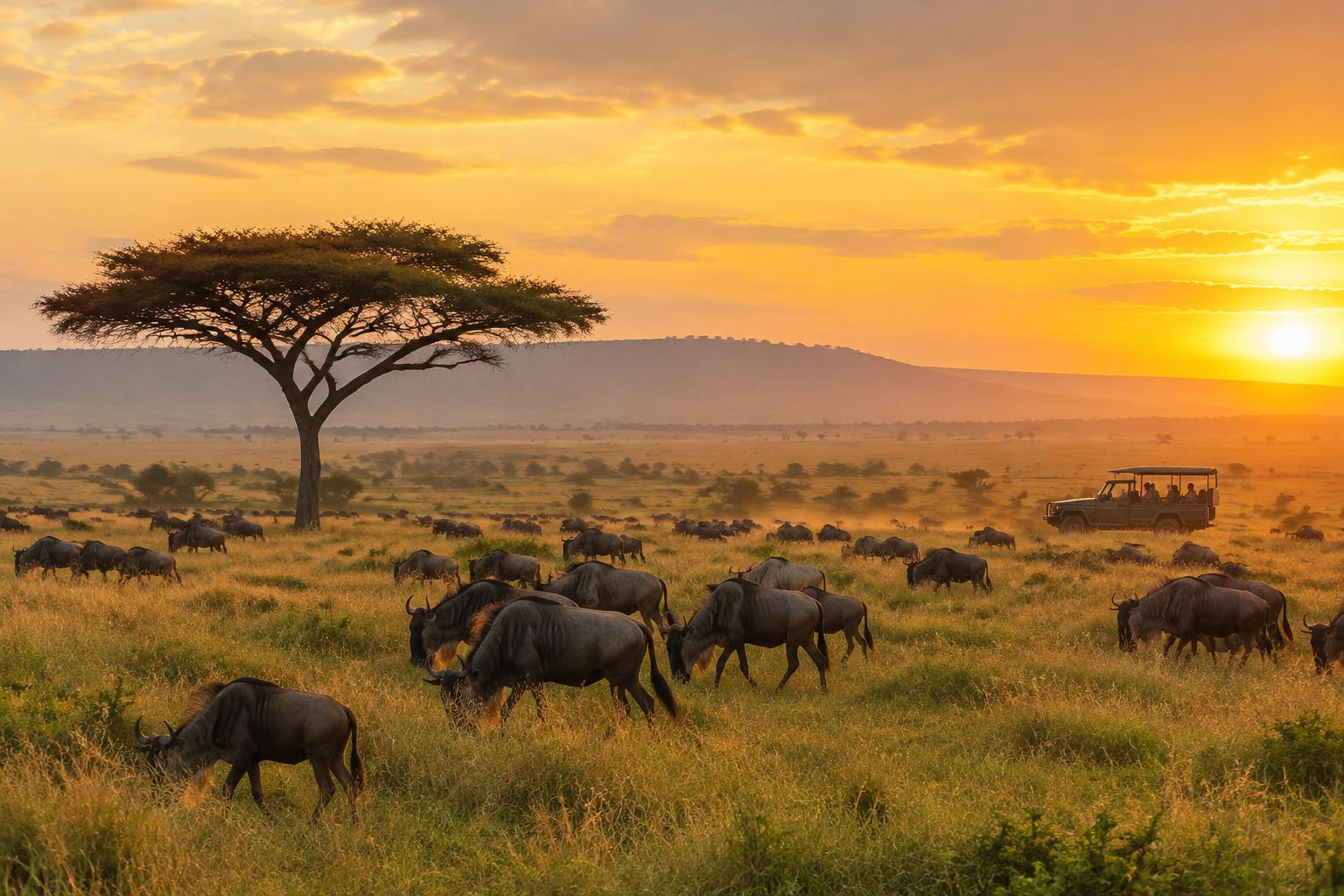
Tanzania offers more variety than almost anywhere in Africa: open Serengeti plains, a wildlife-filled volcanic crater, elephant country in Tarangire, the remote wilderness of Ruaha and Nyerere, and Zanzibar's beaches an hour away by air. The difference between a good trip and a remarkable one is mostly planning — being in the right part of the Serengeti for the month you travel, and not spending your holiday in a vehicle on bumpy roads. If you are still choosing between countries, start with our luxury safari Africa guide.
The Great Migration, month by month
Around 1.5 million wildebeest, with zebra and gazelle, move in a loop through the Serengeti and Kenya's Maasai Mara. Where you stay should follow the herds:
- January–March: calving on the southern plains around Ndutu — thousands of calves born each day and constant predator action.
- April–May: long rains; herds move through the central Serengeti. Quieter, greener, lower rates.
- June–July: the Western Corridor and Grumeti River crossings, with crocodiles waiting.
- July–October: northern Serengeti and the Mara River crossings — the most famous scenes, best chances in July to September.
- November–December: short rains; herds return south through the eastern Serengeti.
These are patterns, not timetables. Rain shifts the herds every year, which is why many of our guests choose mobile or seasonal camps that move with them.
Where to go: the main parks
- Serengeti National Park: the heart of any first trip — big cats, the migration and endless plains. Allow at least three or four nights.
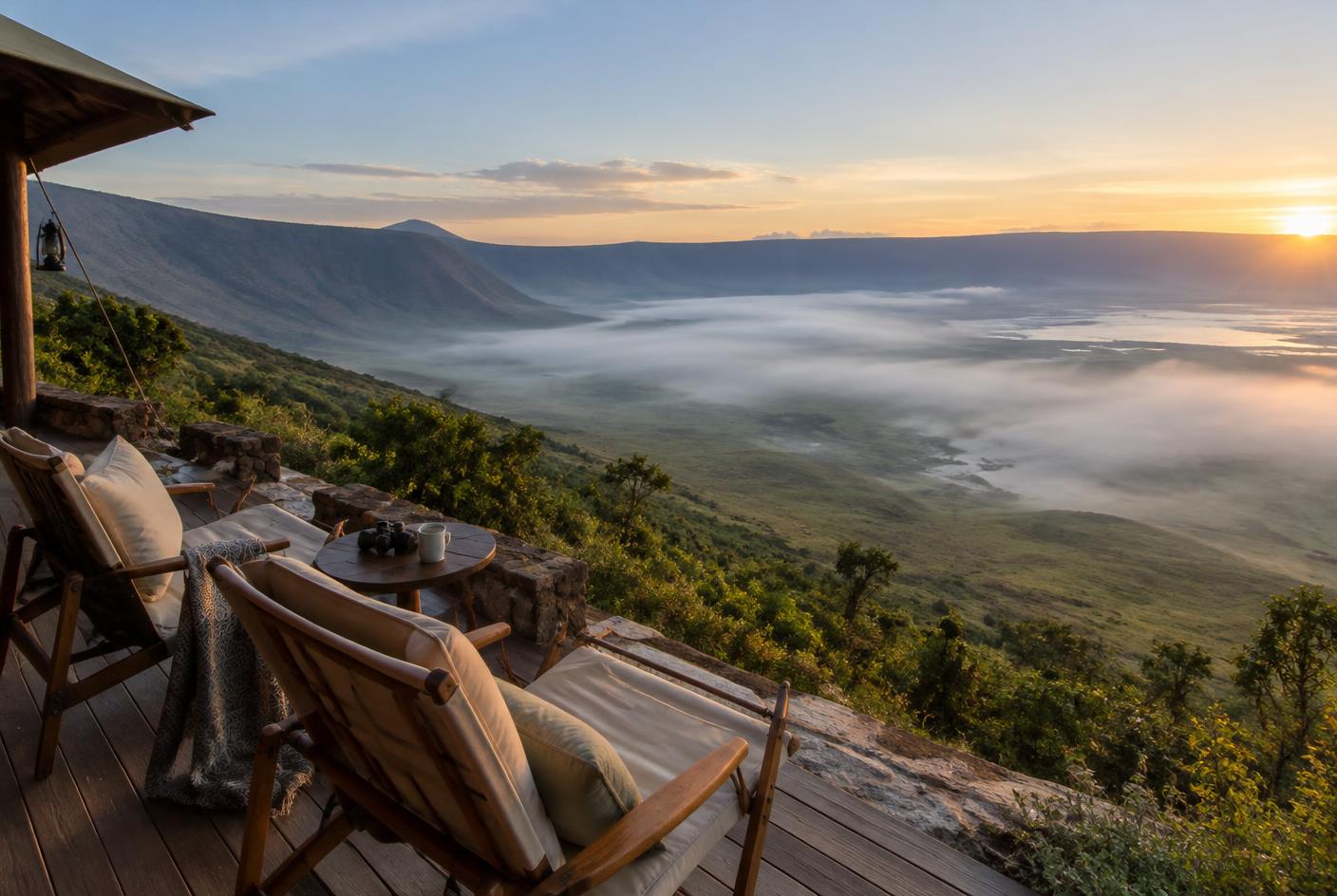
- Ngorongoro Crater: a collapsed volcano with a dense population of wildlife, including rare black rhino. Usually one full day on the crater floor, staying at a lodge on the rim.
- Tarangire: baobab trees and big elephant herds, best June to October. An easy first stop from Arusha.
- Lake Manyara: a small, green park, often visited on the way to the crater.
- Ruaha and Nyerere (formerly Selous): the southern circuit — remote, few vehicles, walking safaris and boat safaris on the Rufiji River. Ideal for a second visit or a quieter trip.
- Mahale and Gombe: chimpanzee trekking on the shores of Lake Tanganyika, reached by charter flight.
Sample itineraries
These are starting points that we adjust to your month, budget and pace.
- 7 nights — the northern classic: Arusha (1), Tarangire (2), Ngorongoro rim (1), Serengeti (3), flying back to Arusha.
- 10 nights — safari and beach: Ngorongoro (2), Serengeti in two areas (4), then Zanzibar (4).
- 12 nights — the full picture: Tarangire (2), Ngorongoro (2), Serengeti (4), Ruaha or Nyerere (3), one night Dar es Salaam or Zanzibar before flying home.
A good rule is at least two nights per camp — three in the Serengeti — so you are not packing every morning.
Getting there and getting around
Most northern safaris start at Kilimanjaro International Airport (JRO), with connections from Europe via Doha, Dubai, Istanbul, Amsterdam or Addis Ababa. The southern parks and Zanzibar are usually reached via Dar es Salaam or Zanzibar airports. Between parks, small scheduled light aircraft land at bush airstrips close to the camps; soft bags around 15 kg per person are the usual limit. We arrange private meet-and-greet at the airport, overnight stays in Arusha and private charters when schedules don't fit.
What a Tanzania safari costs
Indicative 2026/2027 figures — not quotes:
- Luxury tented camps: roughly USD 800–1,500 per person per night in peak season, usually including meals, drinks and shared game drives.
- Ultra-luxury lodges and private reserves: USD 2,500+ per person per night.
- Park and conservation fees: charged per person per day by the park authorities, plus a separate per-vehicle fee for the Ngorongoro Crater floor. These can change, so we always quote them at the current official rate.
- Private vehicle and guide: a supplement at most camps, worth it for flexibility.
- Internal flights: a few hundred US dollars per person per leg.
Prices are often lower in April, May and November, and some camps offer stay-and-save deals. Peak months (July–September and Christmas) sell out early — book 9–12 months ahead.
Choosing the right camp
Location matters more than thread count. A beautiful lodge three hours from the herds is a poor choice in August. We look at where the migration is likely to be, how many other vehicles use the area, whether walking or night drives are allowed, child policies, and whether the camp suits your style — intimate canvas tents or a lodge with a pool and spa.
Practical notes
- Visas are usually arranged online through Tanzania's official eVisa portal before travel.
- Check yellow fever and malaria advice with your doctor well before departure.
- Pack neutral-coloured clothes, layers for cold early mornings, and a good pair of binoculars.
- Tipping guides, drivers and camp staff is customary; we give you clear guidance before you go.
How Britatlas plans your Tanzania safari
Tell us your dates, who is travelling, what you most want to see and a rough budget. We come back with a route, camp choices and a clear all-inclusive price, then handle flights, transfers, park fees and any add-ons — a Zanzibar stay, a hot-air balloon flight over the Serengeti, or a beach finish in the Maldives. We plan for couples, families, groups of friends, agencies and companies alike.