Corporate travel tours turn the time around a business trip into something worth sharing. A visiting team can discover the city after a conference, overseas colleagues can meet beyond the office, and clients can enjoy a carefully chosen experience without a rushed sightseeing schedule. The strongest programme starts with the people and the purpose, not the longest list of attractions.
Britatlas can arrange private touring, incentive experiences and guest hospitality in London, across the UK and in European destinations, subject to the brief and supplier availability. This guide focuses on the experience side of corporate travel: what to plan, how to fit it around meetings and what a clear proposal should include. For broader booking support, see our corporate travel agency guide.
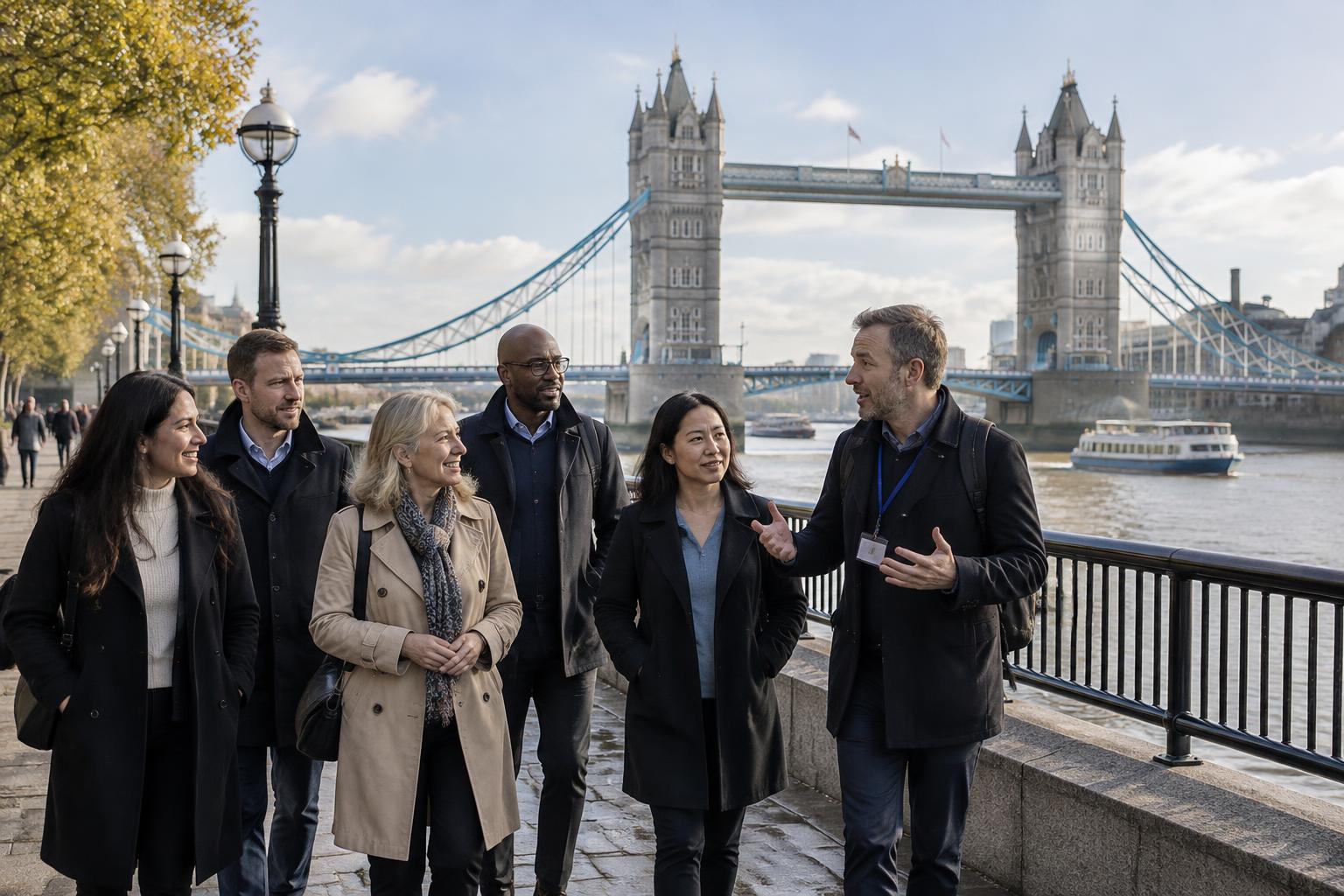
AI-generated illustrative image; the people shown are not Britatlas clients, staff or a confirmed tour group.
Choose the purpose before the itinerary
A reward trip, an informal team outing and a client-hosting afternoon call for different decisions. Reward travel may justify a destination stay and a memorable centrepiece. A conference breakout needs dependable timing and a convenient return. Client hospitality should reflect the guests’ interests rather than how much can be packed into a day.
- Conference touring: a guided neighbourhood visit or cultural experience within a defined free-time window.
- Team outings: shared discovery, relaxed conversation or an optional facilitated activity.
- Incentive travel: a planned reward programme with accommodation, experiences and appropriate downtime.
- Client entertainment: thoughtful touring, dining or separately confirmed event hospitality.
- Executive groups: a smaller private itinerary shaped around meetings, discretion and personal interests.
Ask whether your guests want active participation, cultural interpretation or simply space to connect. A sightseeing walk can be enjoyable without being described as team building. If you need facilitation or structured outcomes, request that service explicitly rather than assuming any group activity will provide it.
Corporate tours in London: make the geography work
London offers history, arts, dining and waterfront experiences, but a corporate schedule benefits from a focused area. A City-based meeting can lead naturally into a nearby historical walk; a Westminster event may suit a riverside route. Avoid making colleagues cross the capital repeatedly between a hotel, an attraction and a restaurant.
A private London tour can introduce landmarks or explore a theme such as architecture, royal history or a neighbourhood’s development. Agree the level of walking, language and interpretation. A chauffeur provides transport; a guide provides the agreed commentary and accompanied visits. The proposal should distinguish the two.
Private attraction experiences can add a memorable shared moment. The London Eye, for example, advertises private pod experiences; such products have their own capacity and booking conditions. An ordinary sightseeing ticket is not exclusive use, and a private guide does not automatically grant after-hours access. Any special arrangement needs supplier approval and written confirmation.
Three practical corporate tour formats
1. A conference afternoon with a proper finish
Start at the meeting venue, explore a nearby district with a guide and finish at a restaurant or reception location. Keep the route compact and include a break. Work backwards from the dinner or next session, with a buffer for leaving the conference and assembling guests. If the available window shrinks, reduce the stops rather than losing the required finish time.
2. A full-day team experience
Combine one substantial visit with lunch and a contrasting afternoon activity. A cultural morning and a relaxed waterfront afternoon can work better than several ticketed attractions. For larger parties, consider separate guided groups that reunite for lunch. Agree regrouping points, communication and late-arrival arrangements before the day.
3. A multi-day incentive stay
Use arrival day for settling in and a welcome meal, give the main experience its own day, then allow an unhurried departure. Accommodation, airport transfers, dining and free time deserve as much attention as the headline activity. These are planning formats rather than fixed packages: flight schedules, venue availability and your budget determine the final sequence.
Beyond London: countryside and European programmes
A country excursion can provide a different atmosphere after city meetings. Our Cotswolds private tour guide explains village selection and the importance of a manageable route. A group visit adds parking, restaurant capacity and walking considerations; an itinerary designed for a couple should not simply be expanded without checking the logistics.
For European stays, choose the destination around arrival connections, the season and the experience you want. A private Barcelona tour can form a cultural element of a wider programme. A multi-country trip needs realistic travel days and clear arrangements between destinations, not a succession of city names that leaves little time on the ground.
UK and European programmes can be requested independently or alongside an existing business trip. Confirm who books each flight, hotel and transfer, and where responsibility changes between suppliers. Do not assume one sightseeing enquiry includes the entire corporate travel programme.
Client hospitality, private dining and incentive experiences
Hospitality works best when it fits the guests. A reserved lunch may be more useful than a demanding activity after a long flight. A private dining room can encourage conversation, but its seating, menu, minimum spend and exclusivity must be confirmed. Dietary needs, non-alcoholic choices and the tone of the occasion belong in the initial brief.
Sport, theatre or cultural events can be requested as additions where suitable access is available. For a seasonal example, our Chelsea Flower Show hospitality guide explains how an event experience can connect with hotels and transfers. Event tickets and hospitality packages have distinct inclusions and conditions; neither should be described as official or guaranteed without evidence.
A luxury programme does not have to be strenuous or elaborate. Appropriate pacing, good guiding and a well-chosen meal often contribute more than a packed schedule. Activities involving heights, boats or physical exertion need suitability checks and a credible alternative for guests who cannot or prefer not to participate.
Group logistics that protect the experience
Start with a realistic guest count and explain when it will become final. Vehicle seating is only one constraint: luggage, boarding time, venue limits and the size at which people can hear a guide matter too. A larger party may need several vehicles or guides, with an agreed plan for departures and regrouping.
Share exact hotel, office and venue addresses, not just neighbourhoods. Identify hard commitments such as a meeting start or an onward flight, and agree where flexibility ends. Additional hours, waiting or route changes may affect the cost. For outdoor elements, discuss a weather alternative and the point at which any replacement must be decided.
Accessibility, inclusion and traveller preparation
Ask guests about walking limits, assistance, dietary needs and language preferences early, sharing only information necessary for the arrangements. Check transport and each venue separately. An accessible vehicle does not establish that an entire walking route, boat or historic building is accessible.
Offer choices where feasible so the programme does not depend on everyone enjoying the same food, activity or pace. Explain footwear, clothing and the expected amount of walking before departure. International visitors should independently check current passport, visa or travel-authorisation requirements with official guidance; a tour booking does not establish entry eligibility.
Corporate tour pricing and approval
The date, guest count, duration, guides, vehicle requirements, admissions, dining and accommodation determine the price. Request the currency, total group cost and any per-person calculation, with applicable taxes and mandatory fees. Identify minimum spends, deposits, final-number deadlines and terms for extra hours or late changes.
A useful proposal lists what is included, what is optional and what remains subject to confirmation. Review cancellation conditions for the overall service and individual tickets, rooms or restaurant bookings. Do not assume all suppliers use the same deadlines or that an optional quotation means space has been held.
If the finance team needs a purchase-order reference, a particular invoice format or separate budget lines, say so before booking. Agree the approval process, booking contact and operational responsibilities. Reporting tools, after-hours coverage or particular payment terms should only be relied on when included in the agreed service.
Request your corporate travel tour proposal
Send your destination, dates, estimated number of guests and the purpose of the outing. Include the actual time available, start and finish addresses, approximate budget, language and required elements such as hotels, transfers, guides, meals or admissions. Add accessibility needs and fixed meeting or flight deadlines so the route can be assessed properly.
If you are still choosing a format, describe your guests and what would make the experience successful. Britatlas can help shape a practical proposal rather than adding experiences that do not fit. Use the form below to begin; an enquiry is not a confirmed reservation or payment, and final arrangements depend on your approval and supplier confirmation.
Corporate travel tours: frequently asked questions
Planning references
Destination inspiration: London Convention Bureau. Example of a separately bookable private attraction product: London Eye private pods. Reviewed 16 November 2026; verify current availability, access and supplier terms for your dates. Britatlas is an independent travel arranger, not the operator of these attractions.